
Whole Family Systems / 2GEN: Cohort 1
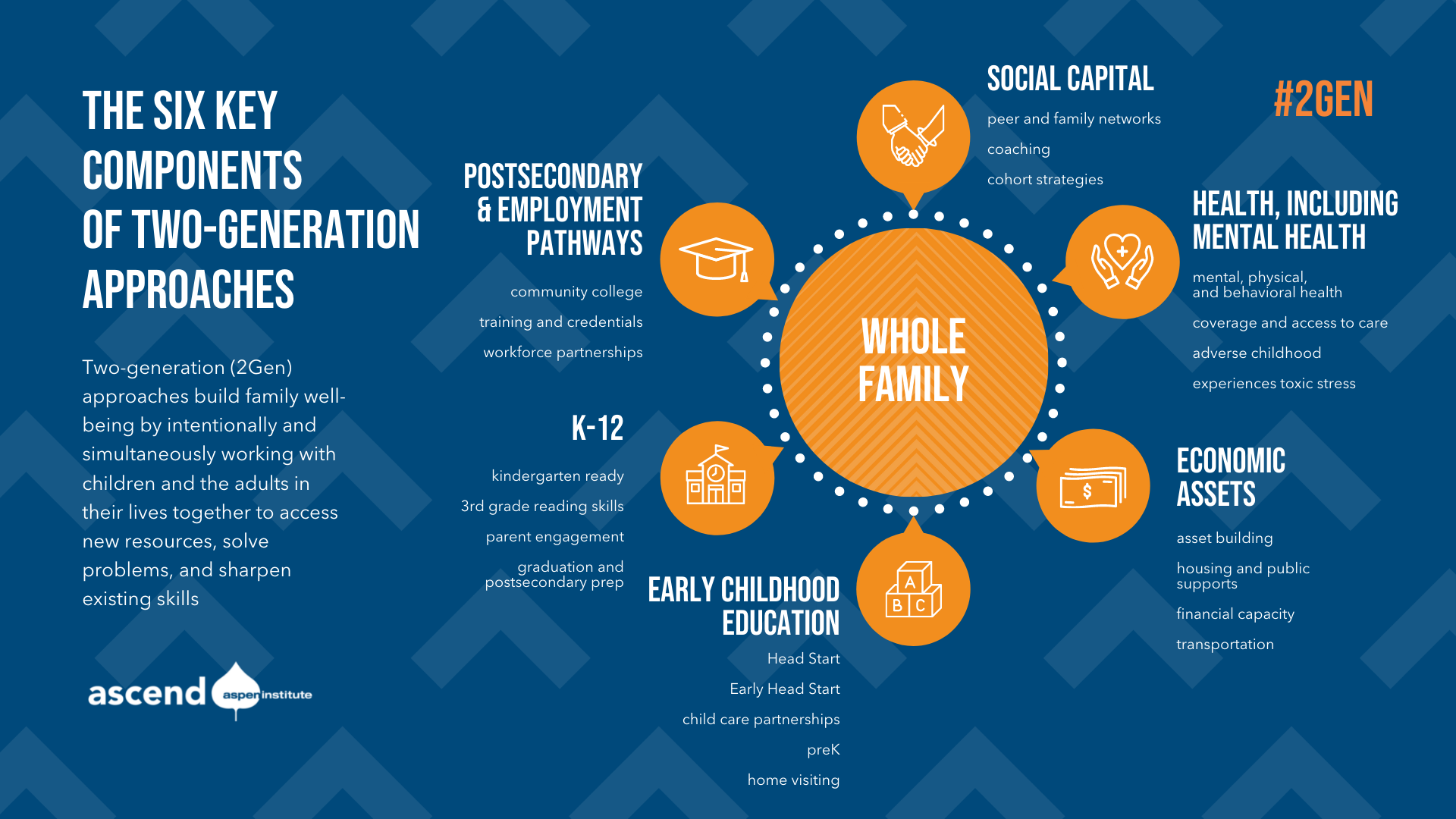
2Gen approach (Source: Ascend at the aspen institute)
Project Background
Cohort 1 of the Whole Family Systems (WFS) Initiative was a 5-year joint effort of state agencies, counties, local organizations, and the White Earth Nation. The initiative started in 2016 and continued through fall 2021. The Minnesota 2-Generation Policy Network is a joint-effort of state agencies, counties, local organizations, and the tribal nations. The Network is designed to advance two-generation approaches to policies and practices that improve outcomes for children and parents, together.
Project Vision
All partners in the WFS Initiative have a shared vision:
Minnesota will have families that thrive
Services will be integrated to support children and families
Systems will support integration and effectiveness
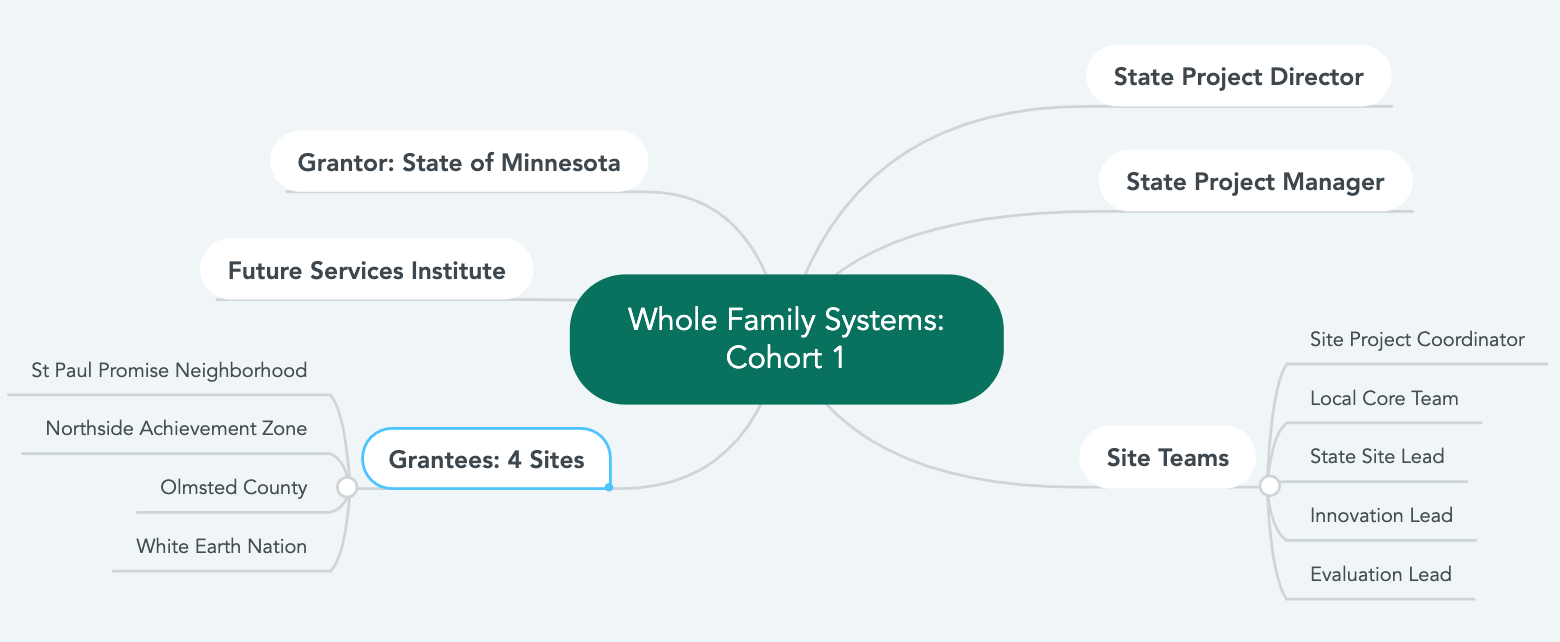
whole family systems - program structure for cohort 1
Program Structure
Grantor: Minnesota Department of Human Services awarded four Whole Family Systems Grants
Grantees: Each grantee organization serves young children and families in communities with significant racial, ethnic, economic, health, and education disparities. The grantees have programming focused on early childhood development or education readiness.
Teams
DHS and FSI staff are working directly with the four local sites. To help facilitate learnings the project is intended to be done through a human-centered design approach. The various teams listed below are formed to help achieve the stated project goals.
This team oversees and tracks the detailed activities of each site, strategically solves emerging needs, documents the learnings, and supports facilitation of engagements to do this work. The Site Team consists of:
Site Project Coordinator: Appointed lead from each site who manages and runs the 2-Generation Policy Network grant project.
Local Core Team: An advisory group that includes the site team and all relevant partners representing the various systems that touch the problem being addressed at the site.
State Site Lead: Based in a state agency, they provide support in connecting the local work to state policy areas. The State Site Lead is a partner in this work and does not serve as a contractual enforcer for the state.
Innovation Lead: The innovation lead from the Future Services Institute will partner with the site Team and support the work through facilitation, research, and program development.
Evaluation Lead: A member of the DHS Evaluation team who will learn and share learnings across the sites and elevate learnings to other levels (e.g. state) for action
Learnings
Report on Learnings (Summer 2021)