
2019 marked the third year of the Future Services Institute’s presence and impact on the human services sector. As we continue to grow and deepen our partnerships with national, state, and local change makers, we recognize that this work - to improve human services for the future of families and communities - is all of ours.

We are so proud to unveil our first ‘annual report’ or what we think of as our learning snapshot. As the Future Services Institute has grown, we realize it’s important to share some of what we are discovering as we work in partnership with human service organizations and leaders throughout Minnesota and the country.
The last year was full of new relationships, new projects, and more impact. Our work is consistent with a long-standing Minnesota tradition that seeks to support local innovation, and our use of human-centered design helps keep the focus where it should be: a family-in-need’s experience of the services designed to help them. Yet our work also seeks to interrogate and challenge other Minnesota traditions, particularly those which have kept the voices of people of color and Indigenous people off to the side. In our work, we are committed to understanding and challenging the legacy of white supremacy that has impeded the progress of so many Minnesota families.
We hope you will enjoy reading about our accomplishments and we look forward to keep at it in 2020!
Jodi Sandfort, Sook Jin Ong, and Henriët Hendriks
Navigate to the sections:

The Future Services Institute (FSI) began, as many great innovations do, with a big idea and a team of committed individuals. In 2015, Dr. Jodi Sandfort and Sook Jin Ong were working on both a redesign of the Minnesota Family Investment Program (MFIP) with the Minnesota Department of Human Services and supporting workforce development with MSP Win. While learning alongside counties, nonprofits, and other stakeholders involved in service delivery and innovation, a few questions were raised: How can we put human service values into action in our policies and programs? How can we look again at how family experiences of human services are designed? Knowing what we know about evaluation, implementation, and innovation, how could the Humphrey School of Public Affairs be a partner with the field?
In late 2015, a small group from the Humphrey School and Dakota and Olmsted counties came together to consider these questions. Rooted in a vision of working across power, hierarchy, and perspectives to achieve a systems-level impact, the idea of an institute began to sprout. A university-led influencer and incubator, this place would convene and contain innovation and leadership development across sectors.

The original team dreamed broadly of approaches the institute could take to achieve this goal, from peer learning networks to innovation labs, evaluation projects to leadership and capacity development. All were conceptualized within commitments to:
Attack institutional racism and other systemic inequality,
Work across organizations,
Alleviate the burden, stress, and fatigue in systems, and
Integrate services across systems, institutions, and agencies.
The dynamism of such an ambitious organization is reflected in some of the early projects of FSI, including the Equity Works Leadership Institute, Human Services Leadership Certificate, and developmental evaluation of the Gage East Housing Development in Rochester. Not the research-from-afar model traditional to academia, the ever-changing work of direct collaboration with state and local governments has meant fast growth. Building on the Institute’s reputation for hosting learning spaces, and its expertise in developmental evaluation, human centered design, and 2-generational approaches, trust and relationships have continued to grow.
Since being established in the spring of 2016, programming has expanded and evolved. After two years in start-up mode, the Future Services Institute has reached a new point in its organizational life cycle. We are excited to share this snapshot of our 2019 learning with you, and to look ahead to the work to come.


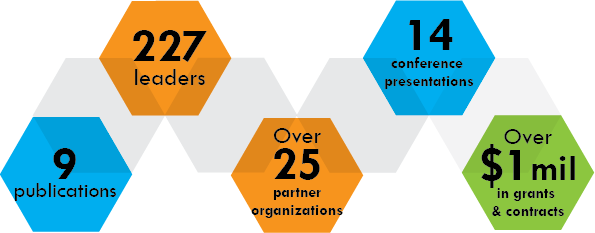
This was a year of significant growth for us. In 2019 we had over 200 individuals participate in our leadership development opportunities: the Human Services Leadership Certificate, Art of Hosting Workshops, and Equity Works Leadership Institute. We worked on a number of innovation, research, and evaluation projects in partnership with clients, researchers, and organizations across the country. Reflecting on what we’ve accomplished, our key learnings can be summarized in three themes:
Innovation is an iterative process
To push for equity, we focus on learning and growth.
We go further if we go together, by pushing the field.


At the Future Services Institute, our work is emergent and iterative. We use human-centered design processes and participatory methods to convene diverse groups to co-create solutions. We listen to the stories of families and frontline staff in what matters to make changes happen. As such, we often lead our partners through discovery, development, testing, and implementation of their collectively designed ideas and concepts.
Three projects from 2019 highlighted the iterative nature of our work:
“There is so much opportunity for growth and change right now with human services that we need leaders in positions willing to tackle different tasks to make change happen. ”


The MFIP Connect app is a phone-based app that connects participants in the MN Family Investment Program (MFIP) with county workers. It began in 2016 as a small pilot project by the Minnesota Department of Human Services, three local sites, a developer, and ourselves, has now blossomed to multiple sites Minnesota-wide and is the blueprint for a larger statewide app development project. In this project, evaluation practices and user experience testing such as a usability studies and consistent check-ins with frontline staff ensured the sites felt well-supported. Monthly group calls helped sites learn ways to improve the integration of technology into their daily service delivery. Many of these practices inform the way the Minnesota Department of Human Services and other state counterparts shape the development of the new statewide app for income and employment support programs.
The Integrated Services Assessment Tool (ISAT) is an engagement-driven assessment tool created in partnership with Olmsted County Health, Housing, and Human Services department. Rather than creating a tool to merely document a family’s needs across a range of domains, such as income, education, health and well-being, we realized that any tool needed to be designed to support the frontline practice model for Integrated Services. This then had us focus initial ideas about ways to support the engagement needs of frontline staff, as well as track interactions and changes in family circumstances. For example, how might space be incorporated in the tool to document information and stories told by participants about their cultural identity? We developed this idea and others and made rough sketches of the potential layout and visual attributes. Staff provided feedback about essential elements, such as enabling it to be touched and used by families and reducing its technocratic look. Another idea that was tested was how to best highlight areas of strength as well as need, and to let families identify their own priority areas for assistance. The thoughtful shaping of this tool is now reflected in the versions used by the staff with the families they serve, and has begun attracting the attention of other organizations who are interested. (Read more about the development story in our FSI brief.)

The Pathways to Prosperity and Well Being (PtPW) initiative with Olmsted and Dakota Counties created opportunities for the counties to work with us to redesign the service experience of young parents with low income who are trying to make ends meet. To accomplish this, there needed to be substantive changes at every level of the human service system, from policy formulation to management and supervision to practice with families. Both counties spent time developing a new practice model that kept the whole family’s needs at the center of the service approach, and recognized that a partnership needs to be forged between frontline staff and families. In the design phase, we played the role of facilitating and supporting the design of the pilot through the human-centered design process, research into social science support for integrated services, and development of a training manual for this new practice model.
The pilot program is the first step in creating a new service system. The counties are currently implementing new operational and administrative policies and practices while building capacity.


We see learning and growth as an opportunity to increase public value by building capacity to support leadership and learning that creates more equitable systems and services in the human service sector. Participants in our programs come from various nonprofit, and public agencies, driven to discover the potential of what it takes to address complex challenges and opportunities in their work.
The programs offered by the Future Services Institute aim to foster and push learning and growth by creating space, time, practices and conversations to address issues of equity that prevent the current human services system from helping all Minnesotans live respectful lives. In addition to equipping leaders with resources to co-create community, our programs aim to change the mindsets and behaviors are changing of professionals in the human service sector.

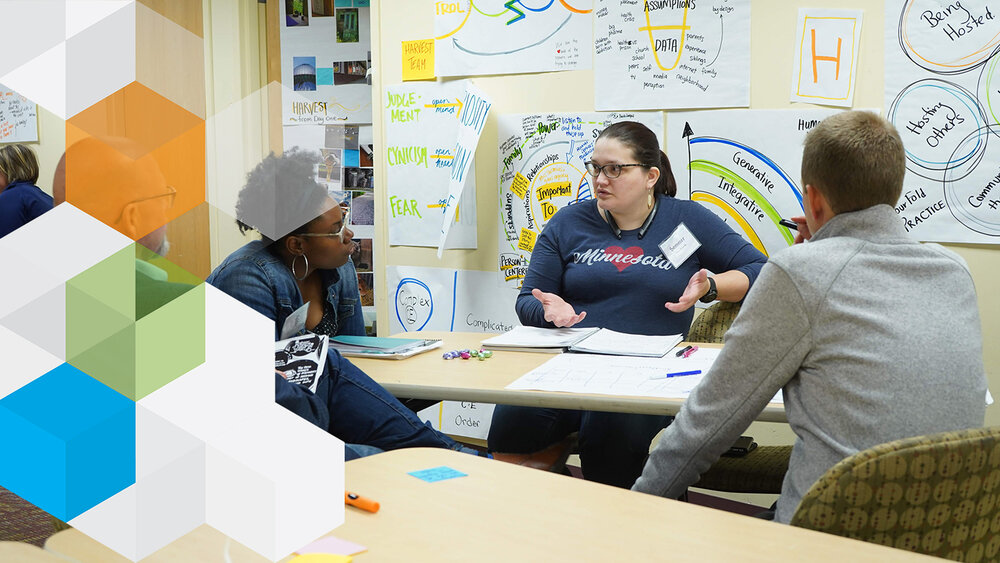
“I became interested in the Human Service Leadership Certificate program because it offers the opportunity to learn and apply innovative ideas and strategies to address complex issues in health and human services that are emerging every year.”
Some of our key programs include:
The Human Services Leadership Certificate at the Humphrey School of Public Affairs - This program pushes emerging leaders in the human services field to challenge their worldviews on racial equity and deepen their practice in redesigning services and systems in an integrated manner.
The Equity Works Leadership Institute for both the workforce development sector and county social services administrators creates cohort-driven spaces for leaders to develop and lead boldly with equity at heart.
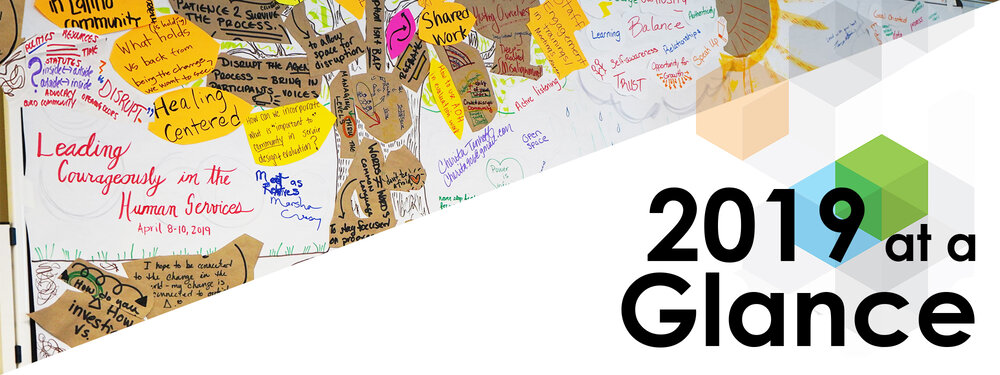
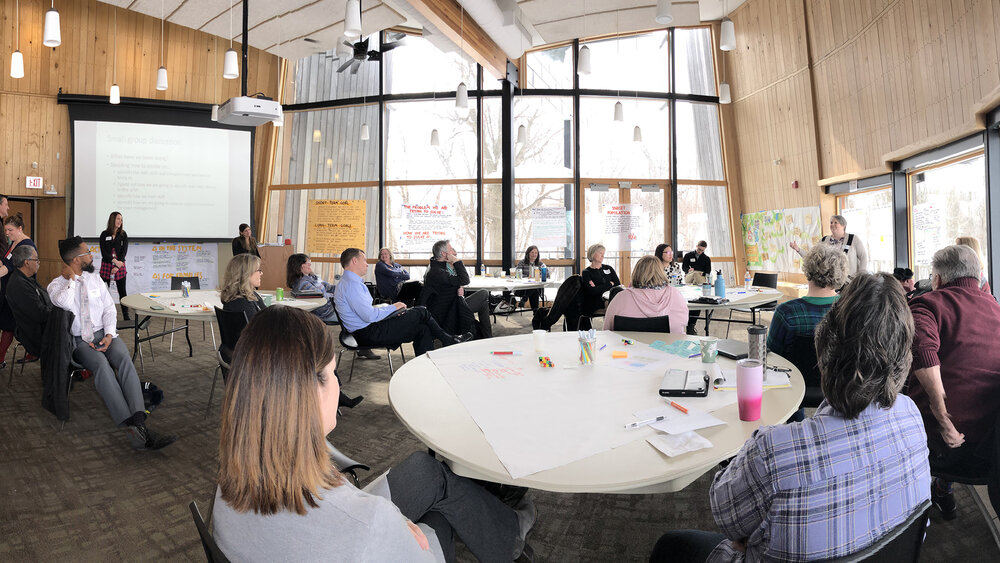
Leading Courageously in Human Services Sector - This is an “Art of Hosting and Harvesting Conversations that Matter” workshop, augmented by a series of deeper dives into specific topices during the summer.
Ongoing workshops for state employees to build their understanding of including a multi-generational lens in policy and program.

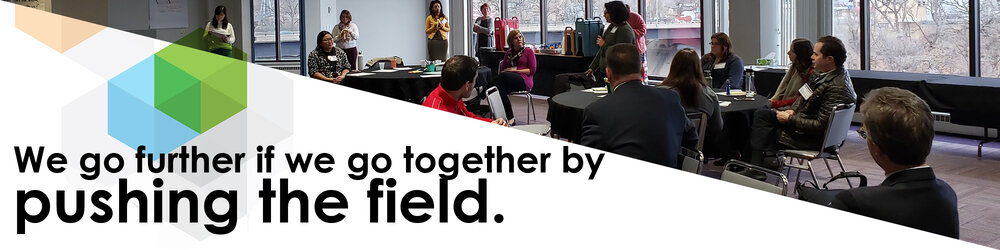
At FSI, we are constantly learning and make it a key goal to intentionally share these learnings with wider academic and professional audiences. We do this by going to national and international conferences, giving talks and keynotes, producing briefs and reports, and publishing in academic journals.
2019 Briefs and Reports:
Assessing the Research Underpinning Whole Families Program Models Brief
Social Science Foundation of the Pathways to Prosperity & Wellbeing Pilot Program Report
2019 Publications:
Sandfort, J., Ong, S. J., & McKay, C. (2019). Performance Management Regimes in Practice: Examining the Local Agencies Implementing Temporary Assistance for Needy Families. The American Review of Public Administration, 49(2), 145-158.
Moulton, Stephanie, Jodi R. Sandfort and Weston Merrick. Forthcoming. “Enabling Social Policy Innovation: Trends and Promising Directions,” Oxford International Handbook of Public Administration for Social Policy Section VI, Chapter 61. Oxford University Press.
Robin Phinney and Jodi Sandfort. Forthcoming. “Discover Together: Attempting to Alter Understanding and Practices in Governments’ Work with Citizens.” Palgrave Handbook on Co-Production, edited by Elke Loeffler and Tony Bovair.
Sandfort, Jodi and Stephanie Moulton. Forthcoming. “Replication or Innovation? Exploring Structuration in Policy Implementation.” Perspectives on Public Management and Governance.
Sandfort, Jodi and Trupti Sarode. Forthcoming. “Exploring Art of Hosting Frameworks and Methods to Enhance Research,” Sage Handbook of Participatory Research, edited by Danny Burns, Jo Howard and Sonia Ospina. Thousand Oaks: Sage Publications.
Sandfort, Jodi. 2018. “Theoretical Foundations and Design Principles to Improve Policy and Program Implementation,” The Handbook of Public Administration, edited by Edmund Stazyk and H. George Frederickson. Edward Elgar Publishing: Cheltenham, UK, 475-496.
“I have access to professionals with diverse perspectives and points of view that offer new and interesting ways to approach problems. I also have access to not only the latest research literature on human services redesign, change management, and engagement that I can use right away in my work.”


2019 Awards Received by the Team:
Trupti Sarode, Dugan Research Award on Philanthropic Impact, from Charity Navigator and Association for Research on Nonprofits Organizations and Voluntary Action, 2019.
Jodi Sandfort, Fulbright Fellow, U.S. Fulbright and Danish Commissions, 2020.
Weston Merrick, Behavioral Intervention Scholars Grant, U.S. Department of Human Services, 2019-2020.

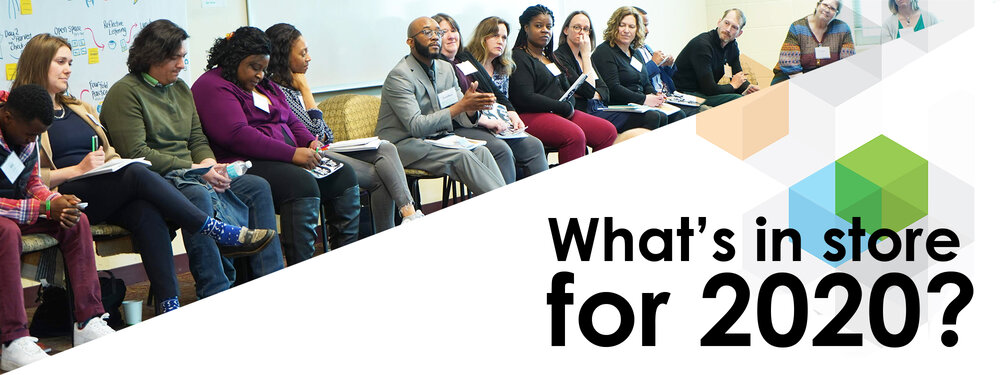


As we enter a new decade, we have some amazing work ahead of us, continuing some of our most exciting work from the past few years.
We are excited to host our second Redesign for Whole Families Summit, which promises to bring top scholars and practitioners together. At this Summit, we are launching an innovation toolkit to share the tools, methods, and methodology behind the work we do at FSI. We invite you to join us there!
We are kicking off our most ambitious project yet: a collaboration with the Minnesota Department of Human Services for the Whole Family Systems Initiative, together with eight community-based sites.
We are continuing our work in strengthening the capacity of the sector via the Human Services Leadership Certificate’s 4th Cohort in Fall 2020 and two more Equity Works Leadership Institute series (Workforce: Spring 2020 and Minnesota Association of County Social Service Administrators: Spring 2020).
We are offering our 4th Art of Hosting in the Human Services workshop - Leading Courageously in the Human Services Sector, from February 11 - 13, 2020.
And as ever, you will continue to see us traveling locally and nationally to learn and share with our peers.

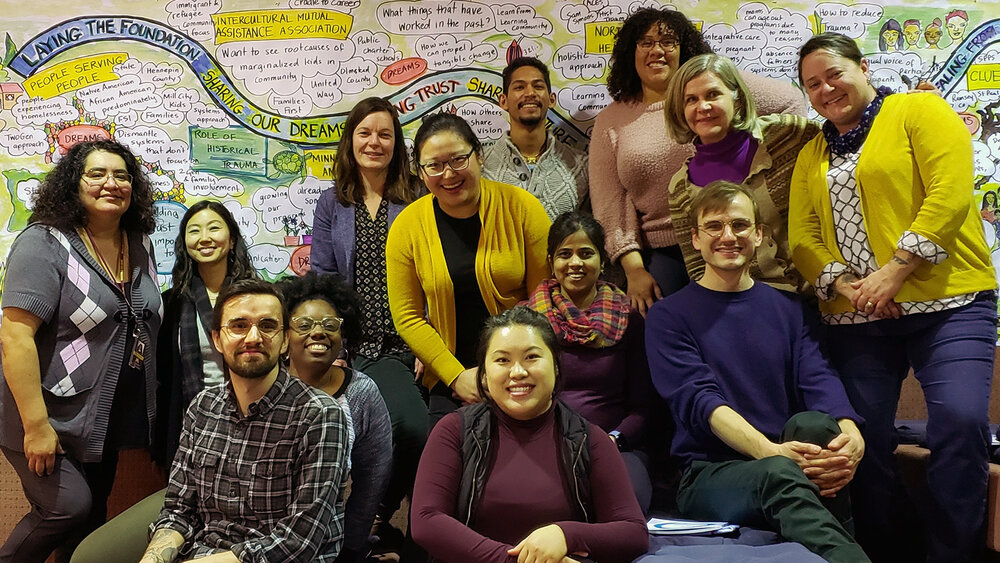


To change systems, we need everyone’s gifts, talents, and perspectives. We look forward to our work together in 2020!
None of our work is possible without the support of our partners and colleagues:
American Public Human Services Association
Art of Hosting International Community
Ascend at the Aspen Institute
Brigham Young University
Dakota County, MN
DKS Systems
Greater Twin Cities United Way
Hennepin County, MN
Humphrey School of Public Affairs
Indiana University, Indianapolis
Kresge Foundation
MDRC
Minnesota Association for County Social Services Administrators
Minnesota Department of Human Services
MSPWin
Neighborhood House
Nexus Community Partners
Ohio State University
Olmsted County, MN
The Outside
Poverty Solutions (University of Michigan)
Prepare and Prosper
Syracuse University
University of Chicago
University of Washington
University of Wisconsin
U.S. Department of Human Services - Office of Planning, Research, and Evaluation
Wilder Foundation